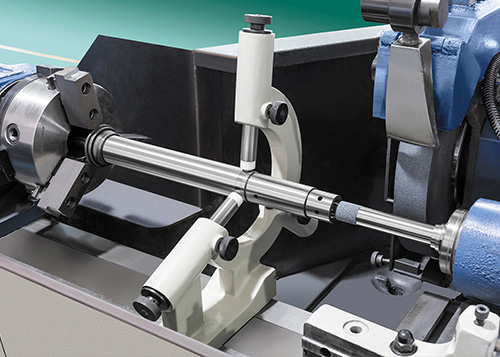
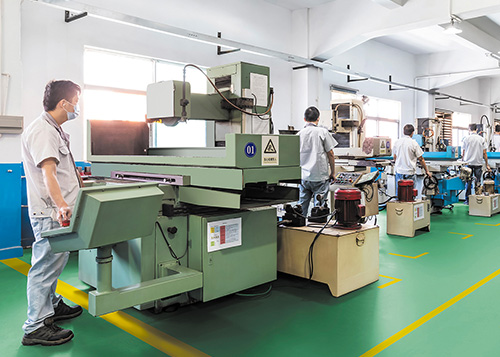
Shortly after the 2025 Spring Festival, Lao Zheng stared blankly at the "old companion"—a machine tool that had been in use in his factory for seven or eight years. "The factory next door introduced new machine tool equipment and a fully automated production line not long ago, and snatched away many customers. Of course, I’m tempted too. But when I look at the cash flow in the accounts, it can probably only support the factory for another half a year at most," he sighed.
This scene may be a microcosm of the current state of most machine tool enterprises. During the window period of industry reshuffling, should they choose to stay conservative for stability or pursue innovation for breakthroughs? Can conservatism really guarantee stability? And where can they find the courage and capital for technological iteration?
Corresponding to the personal struggles of those deeply involved in the industry, the 2024 statistical data of the machine tool industry is like a mirror, reflecting both the dawn of market recovery and the practical challenges of intensified competition and shrinking profit margins within the industry.
The China Machine Tool & Tool Builders’ Association (CMTBA) recently released the 2024 economic operation data of the machine tool industry. The data shows that in 2024, the total operating revenue of the entire machine tool industry reached 1.0407 trillion yuan, a year-on-year decrease of 5.2%; the total profit was 26.5 billion yuan, a year-on-year decrease of 76.6%; the profit margin was 2.6%, a year-on-year decrease of 7.8 percentage points.
"In 2024, the overall operation of the machine tool industry showed a trend of 'low in the first half and high in the second half'. The operating revenue of the entire industry was slightly lower than that of the previous year, and profit margins continued to narrow. However, there was a significant divergence in operation between sub-sectors and enterprises. The new orders and outstanding orders for metalworking machine tools both resumed growth, indicating initial signs of a warmer market demand," the CMTBA summarized the overall economic operation of the industry in 2024.
According to CMTBA data, in 2024, the operating revenue of the machine tool industry was 1.0407 trillion yuan, a year-on-year decrease of 5.2%, and the decline narrowed by 1.4 percentage points compared with the January-September period of 2024.
Among sub-sectors:
Operating revenue of metal-cutting machine tools reached 168.7 billion yuan, a year-on-year increase of 6.3%, with the growth rate expanding by 2.4 percentage points compared with January-September.
Operating revenue of metal-forming machine tools was 93 billion yuan, a year-on-year increase of 4.4%, with the growth rate narrowing by 3.2 percentage points compared with January-September.
Operating revenue of machine tool functional components and accessories stood at 61.1 billion yuan, a year-on-year increase of 6.8%, with the growth rate narrowing by 4.3 percentage points compared with January-September.
Operating revenue of cutting tools was 107.7 billion yuan, abrasive tools & grinding materials 450.2 billion yuan, and other products 160 billion yuan.
From the full-year operating revenue in 2024, it is clear that metal-forming machine tools, metal-cutting machine tools, and machine tool functional components & accessories all achieved year-on-year growth; the growth rate of the cutting tool sub-sector fell back to a slight decline, decreasing by 1.8% year-on-year; the abrasive tools & grinding materials sub-sector remained in a downward trend, decreasing by 15.1% year-on-year, though the decline narrowed by 2.9 percentage points compared with January-September. Affected by this, the operating revenue of the entire industry was still in a downward range, but the decline continued to narrow.
"It is worth noting that with the effective implementation of existing policies and the accelerated launch of a package of incremental policies, the combined effect of policies has continued to play out, effectively boosting market confidence. From October to December 2024, the Manufacturing PMI remained above the critical point for three consecutive months, and investment in equipment renewal maintained rapid growth, which had a significant driving effect on the machine tool industry. Both the supply and demand sides of main machine products showed growth," a relevant person in charge of CMTBA pointed out.
For example, the output of metal-cutting machine tools and metal-forming machine tools of large-scale enterprises (as defined by the National Bureau of Statistics) has entered a growth trajectory since July 2024. The new orders and outstanding orders for metal-cutting machine tools and metal-forming machine tools of key enterprises contacted by the association also showed growth.
Specifically, in 2024, the new orders and outstanding orders for metalworking machine tools of key enterprises contacted by the association increased by 5.5% and 10.8% year-on-year respectively, reversing the downward trend of the previous year. Among them, the new orders and outstanding orders for metal-cutting machine tools increased by 7.6% and 8.7% year-on-year respectively, with the growth rates expanding by 2.9 and 0.4 percentage points compared with the previous year; the new orders and outstanding orders for metal-forming machine tools increased by 1.2% and 14.8% year-on-year respectively, turning from decline to growth compared with the previous year.
The growth of new orders and outstanding orders also reflects, to a certain extent, the market’s expectation for the recovery of the machine tool industry. BOCOM International stated in a research report that in 2025, with the release of equipment renewal demand and the implementation of incremental policy effects, the downstream demand for machine tools will continue to recover. At the same time, driven by the continuous update cycle of the machine tool industry and the rapid development of emerging industries such as aerospace and humanoid robots, the market demand for mid-to-high-end CNC machine tools will also continue to grow, which is expected to significantly improve the operating performance of machine tool enterprises.
"In the short term, the prosperity of the machine tool industry is still in the stage of bottoming out and recovering. The orders of leading enterprises have improved month-on-month, but the improvement range is limited," Zhou Ershuang, an analyst at Soochow Securities, admitted. However, the state has placed "expanding domestic demand" at the core of its 2025 policy agenda. As policy transmission is gradually implemented, the pro-cyclical machine tool sector is expected to recover and warm up.
Relevant institutions predict that policies will further empower the machine tool industry in terms of financing and technological R&D. Demand in high-end fields such as aerospace, military industry, and new energy will remain strong, and leading main machine manufacturers will increase R&D investment to accelerate penetration into high-end fields.
In 2024, the total profit of the machine tool industry was 26.5 billion yuan, a year-on-year decrease of 76.6%, and the decline narrowed by 2.2 percentage points compared with the January-September period of 2024.
Among sub-sectors:
The profit of metal-cutting machine tools was 11 billion yuan, a year-on-year decrease of 3.8%, with the decline expanding by 1.3 percentage points compared with January-September.
The profit of metal-forming machine tools was 4.1 billion yuan, a year-on-year decrease of 24.2%, with the decline expanding by 17.8 percentage points compared with January-September.
The profit of machine tool functional components and accessories was 5 billion yuan, cutting tools 9 billion yuan, abrasive tools & grinding materials -11.3 billion yuan (a loss), and other products 8.9 billion yuan.
From the full-year profit situation in 2024, only the machine tool functional components & accessories sub-sector maintained continuous growth, with a year-on-year increase of 20.5%; the decline ranges of metal-cutting machine tools and metal-forming machine tools both expanded; the abrasive tools & grinding materials sub-sector was in a state of loss overall.
In 2024, the average profit margin of the entire machine tool industry was 2.6%, a year-on-year decrease of 7.8 percentage points, which was basically the same as the profit margin in the January-September period of 2024.
Among sub-sectors:
The profit margin of metal-cutting machine tools was 6.5%, a year-on-year decrease of 0.7 percentage points.
The profit margin of metal-forming machine tools was 4.4%, a year-on-year decrease of 1.7 percentage points.
The profit margin of machine tool functional components and accessories was 8.2%, cutting tools 8.3%, abrasive tools & grinding materials -2.5%, and other products 5.6%.
"Although the demand for high-end machine tool products maintains a growth trend, the effective demand in traditional user fields is insufficient. Coupled with the serious homogeneity of mid-to-low-end products and intensified 'involutionary vicious competition', profit margins have been further compressed," the above-mentioned person in charge further explained. In 2024, both the total profit and profit margin of the machine tool industry decreased significantly year-on-year. Among all sub-sectors, except for machine tool functional components & accessories, the profit and profit margin of other sub-sectors decreased to varying degrees compared with the previous year, and the abrasive tools & grinding materials sub-sector even fell into the loss range. The continuous narrowing of profit margins and the obvious weakening of profitability in the industry require high attention.
The reporter learned that in response to the continuous and significant decline in key indicators of the abrasive tools & grinding materials sub-sector, the CMTBA conducted a special survey in the third quarter. According to the survey results, the decline of the abrasive tools & grinding materials sub-sector is mainly due to three reasons: first, changes in the domestic market demand structure, leading to a significant decline in demand in specific markets; second, turbulent international situations, resulting in reduced demand in the international market; third, serious homogeneous competition, which was further exacerbated by the economic downturn.
Not only do the market conditions of different sub-sectors in the machine tool industry vary greatly, but there is also a significant divergence between different enterprises. Driven by policies such as the "Two New Directions" (new-quality productive forces, new technology fields) and "Two Priorities" (national major strategies & projects, security capacity building in key fields), as well as demand from emerging industries and new technology sectors, high-end products have maintained a sound growth momentum. Some enterprises that focus on new-quality productive forces, adhere to high-quality standards and technological innovation, and pursue digitalization and intelligence have achieved rapid growth. Data shows that among the key enterprises contacted by the CMTBA, 57.4% achieved year-on-year growth in operating revenue, and 51.0% were profitable with year-on-year profit growth.
In addition, in the list of the first batch of national "Excellent-Level Smart Factories" recently released by the Ministry of Industry and Information Technology, a number of enterprises from the machine tool industry were included. These include the "Digital Collaborative Management Smart Factory for High-Grade CNC Machine Tools" of Jiangsu Yawei Machine Tool Co., Ltd., the "Full-Process Multi-Optimization Smart Factory for Precision Automotive Forgings" of Hubei Sanhuan Forging Co., Ltd., and the "Smart Factory for Precision Testing Equipment Based on Digital Twins" of Hexagon Manufacturing Intelligence (Qingdao) Co., Ltd.
Data shows that in 2024, the import and export of China’s machine tool industry decreased slightly overall, characterized by a continued decline in imports, sustained growth in exports, and an expanded trade surplus. Specifically, the import value was 10.16 billion US dollars, a year-on-year decrease of 8.6%; the export value was 21.72 billion US dollars, a year-on-year increase of 4.0%, with the growth rate expanding by 2.8 percentage points compared with the previous year.
Among the main product categories of machine tools:
In 2024, the export value of metal-cutting machine tools reached 5.6 billion US dollars, cutting tools 3.98 billion US dollars, metal-forming machine tools 2.61 billion US dollars, and machine tool functional components 1.89 billion US dollars—all maintaining year-on-year growth. Among them, the exports of metal-forming machine tools and woodworking machine tools even achieved double-digit growth, playing a key supporting role in the overall operation of the industry.
The export value of metalworking machine tools has entered a period of stable growth. Driven by factors such as the gradual improvement and stable development of China’s manufacturing industry’s overseas layout, and the continuous growth of domestic demand, the export value of metalworking machine tools has shown a growth trend. In 2024, the export value of metalworking machine tools reached 8.21 billion US dollars, a year-on-year increase of 5.6%.
Special processing machine tools were the top product in terms of export value, reaching 2.33 billion US dollars (a year-on-year increase of 1.8%), accounting for 28.4% of the total export value of metalworking machine tools. Lathes, machining centers, forming & bending machines, and metal cold-working presses ranked 2nd to 5th, with export values of 810 million US dollars, 810 million US dollars, 720 million US dollars, and 560 million US dollars respectively.
From the 2024 import and export data of the entire industry, it is clear that against the backdrop of the global manufacturing industry moving towards high-endization, intelligence, and greenization, the accelerated industrialization of emerging economies, and the adjustment of terminal customers’ supply chain strategies, many enterprises in the industry have actively integrated into the global industrial chain and supply chain by expanding export business, establishing overseas factories and service institutions. "Facing the intensified involution in the domestic market, going overseas has opened up a new direction for machine tool enterprises. Currently, leading enterprises are accelerating their layout in markets such as Southeast Asia and India," Zhou Ershuang said.
In February this year, in the production workshop of Guiyang Xianfeng Machine Tool Co., Ltd. (hereinafter referred to as "Xianfeng Machine Tool"), an MK8440×35 CNC roll grinding machine was in the assembly stage. After passing inspection and acceptance, it will be delivered to India Metal Packaging Co., Ltd.
According to Yin Kaiqi, General Manager of the Marketing Center of Xianfeng Machine Tool, the company signed its first order with India in 2024. Although the model of the grinding machine is relatively small, it is mainly used in the aluminum foil industry and has extremely high requirements for precision—and the company’s products can fully meet the customer’s needs. After multiple inspections and comparisons in September last year, India Metal Packaging Co., Ltd. finally chose Xianfeng Machine Tool and signed this order worth 3.2 million yuan.
Taking advantage of the "Belt and Road" Initiative, the number of overseas orders received by Xianfeng Machine Tool has achieved continuous growth since 2020. Especially in 2024, the contribution rate of overseas orders to the company reached 10%, and its products are exported to many countries and regions including Algeria, Uzbekistan, Indonesia, Bangladesh, and Pakistan.
As an intelligent equipment solution provider focusing on the R&D, production, and sales of CNC machine tools, Guangdong Chuangshiji Intelligent Equipment Group Co., Ltd. has also achieved remarkable results in the overseas market relying on its technological and product advantages. In 2023, the company’s overseas revenue reached 145 million yuan, a year-on-year increase of 74.84%.
"We will continue to advance our overseas layout, expand our overseas marketing team, promote the construction of an agent system, and do a good job in product selection planning, technical support, after-sales service, and brand marketing for overseas markets. We will further penetrate overseas markets such as Southeast Asia and North America to enhance our global reputation and market share," a relevant person in charge of the company said.
The ups and downs and reshuffling of the industry are not only related to the survival of enterprises themselves but also bear the mission of China’s manufacturing industry to move towards high-end development. With the continuous release of policy dividends, the significant improvement in product technology and quality stability, the continuous update of downstream user demand, and the accelerated overseas layout of relevant enterprises, the machine tool industry may usher in a "qualitative change" inflection point in 2025.
Source: China Industry News Network






 Free Service Hotline:
 Email:allisonho@foxmail.com
 Address:1st Floor, Building E, No. 6, Hongye South 2nd Road, Tangxia Town, Dongguan City, Guangdong Province
 Fax:0769-82865290