



Time:2025-11-05 Preview:1

1. Industry background and development status
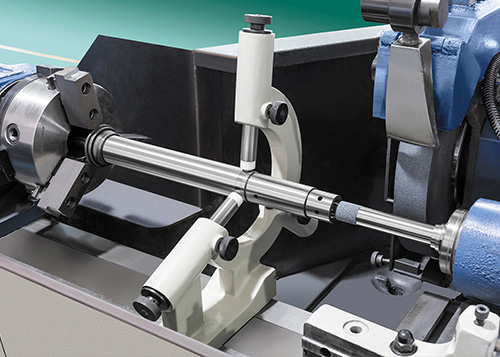
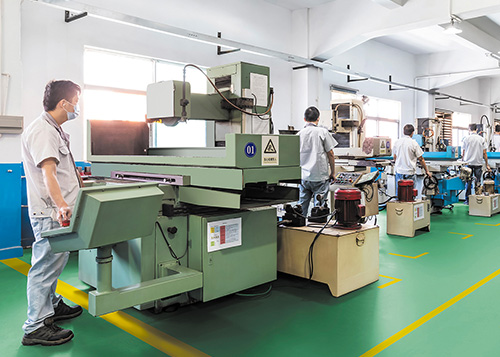
Precision parts manufacturing refers to the comprehensive use of high-precision metal forming technology, precision testing, computer technology and other modern technologies to process metal or non-metallic materials into predetermined shapes and sizes through pressure casting, molten mold casting, extrusion casting, model forging, stamping, cutting, powder metallurgy and other forming methods. The process of parts.
Compared with ordinary parts, precision parts have the characteristics of high processing accuracy, small dimensional tolerance and high surface finish. They can be widely used in analytical instruments, oil and gas services, semiconductor equipment, medical equipment, air transportation and other fields with high requirements for equipment precision and quality. The precision parts manufacturing industry is a cross-industry of the material processing industry and the machinery industry, which originated in economically developed regions such as Europe, the United States and Japan in the early 1960s.
At that time, under the background of the accelerated division of labor in the manufacturing industry, in order to gain a competitive advantage, large brand manufacturers gradually outsourced the production of precision parts to more professional specialized manufacturers, which gave rise to a large number of precision parts manufacturing enterprises. China's precision parts manufacturing industry originated in the 1980s.
Benefiting from the wave of reform and opening up and the shift of the global industrial chain to emerging markets, China's precision parts manufacturing industry has developed rapidly, and China has gradually become an important production base for global precision parts. In recent years, China has established a complete, independent and complete manufacturing industry system through the introduction of foreign advanced technology and independent innovation, and the development trend of the manufacturing industry is good.
According to the data of the Ministry of Industry and Information Technology, the added value of regulated industries in 2024 increased by 5.8% year-on-year, an increase of 1.2 percentage points compared with 2023; the number of regulated industrial enterprises reached 512,000, an increase of 6.1% compared with the end of 2023; all industrial added value completed 40.5 One trillion yuan, the overall scale of the manufacturing industry has ranked first in the world for 15 consecutive years. The rapid development of communications, electronics, automobiles, semiconductors, medical care, energy, aerospace and other industries has further boosted the demand for upstream precision parts and promoted the continuous expansion of the precision parts manufacturing industry.
At present, under the dual driving force of domestic downstream industry development and overseas demand growth, China's precision parts manufacturing industry is developing well.
2. Industry market size
As the basic industry of the global manufacturing industry, the market capacity of precision parts is huge. According to Research Nester, a market research organization, the market size of precision parts in 2024 will exceed 182.58 billion US dollars, and it is expected to exceed 915.08 billion US dollars by 2037. During the forecast period (i.e. 2025 The compound annual growth rate of - 2037) will exceed 13.2%. In 2025, the size of the precision parts industry is estimated at 223.18 billion US dollars.
In addition, the global metal manufacturing market has also increased from 3.02 trillion US dollars in 2021 to 3.43 trillion US dollars in 2022, with an annual growth rate of 13.30%; it is expected that by 2026, the global metal manufacturing market will average 7.30% per year. The compound growth rate increased to 4.54 trillion US dollars. Focusing on the domestic market, according to the data of the National Bureau of Statistics, the total operating income of enterprises above the scale of China's metal products industry (annual income of 20 million yuan or more) will reach 4,608.370 billion yuan in 2023. According to Statista, China's metal products operating revenue will reach 880.1 billion US dollars in 2025.
3. Sub-market downstream of the industry
(1) Analytical instruments
Analytical instrument is an instrument that can analyze the composition and structure of substances. It has obvious research and development attributes and can be used in laboratories in the fields of chemistry, biology, materials and enterprise research and development inspection. Advanced analytical instruments and equipment are the basic conditions for scientific research and technological innovation.
As the world enters the era of knowledge-intensive economy, the scientific and technological competition between countries is becoming more and more fierce. Europe, the United States, China, Japan and other countries and regions have introduced a series of scientific and technological innovation policies to concentrate more resources in the field of scientific research and development. According to the statistics of the World Bank, the proportion of global R&D expenditure to GDP rose from 1.98% to 2.68% from 2013 to 2022, showing an upward trend year by year during the statistical period. With the increasing importance of the strategic value of scientific research investment, it is expected that global R&D expenditure will continue to rise.
The growth of investment in scientific research and development has driven the growth of market demand for scientific analytical instruments. According to SDI statistics, from 2016 to 2023, the global market size of experimental analytical instruments increased from 53.41 billion US dollars to 78.92 billion US dollars, with an average annual compound growth rate of 5.74%. According to Quantuo data, the global market size of experimental analysis instruments will increase to $82.03 billion in 2024.
Judging from the product structure of experimental analysis instruments, according to the statistics of SDI and Dahe Think Tank, the total share of other analytical instruments and mass spectrometer-related instruments exceeded 50% in 2022. The market share of other analytical instruments ranked first, accounting for 44%; mass spectrometers and instrument spare parts ranked second and third, accounting for 15% and 12% respectively. The downstream market of chromatographs, gas or smoke analysis instruments and spectrometers is vast, accounting for a total of 26%.
Mass spectrometer
Mass spectrometer is an analytical instrument that conducts qualitative and quantitative analysis of substances by measuring the mass of charged particles. According to the scope of application, mass spectrometers can be divided into isotope mass spectrometers, inorganic mass spectrometers and organic mass spectrometers. According to Data Bridge MarketResearch, the global mass spectrometry market size in 2024 is worth 6.76 billion US dollars, and is expected to reach 13.06 billion US dollars by 2032, with a compound annual growth rate of 8.58%. As a high-end analysis product in the instrument industry, the mass spectrometer started relatively late in China and has a high degree of dependence on imports. The mass spectrometer products in the domestic market are still mainly imported products. According to the statistics of the General Administration of Customs and iFinD, in 2022, 2023 and 2024, China's imports of mass spectrometer equipment will be 1.771 billion US dollars, 1.901 billion US dollars and 1.396 billion US dollars respectively.
Chromatograph
Chromatograph is one of the sub-categories of analytical instruments, which is mainly used for the separation and analysis of complex multi-component mixtures. Since the 1980s, chromatographs have gradually replaced spectrometers as the main instrument analysis scheme. Among them, with the progress of relevant technologies, high-efficiency liquid chromatographs and gas chromatographs are becoming one of the most important subdivisions in the field of chromatography.
According to Global Market Insights, the global chromatograph market will reach $9.2 billion in 2022, and the average annual compound growth rate is expected to exceed 5% between 2023 and 2032. At present, global scientific instrument giants such as Waters, Siemens and Danaher have occupied most of the market share in the field of chromatography with their technological advantages. China's chromatography instruments show the characteristics of high dependence on imports. According to the statistics of the General Administration of Customs and iFinD, the overall import of chromatographs in China showed an increasing trend from 2017 to 2022, and the import volume has declined since 2023, mainly due to the pressure of downstream demand. With the successive introduction of scientific and technological innovation policies in the future and the continuous growth of scientific research investment, the domestic demand for chromatographs will be good in the long run.
Genetic testing equipment
Genetic detection technology refers to the technology of extracting the test subject's genes from blood, body fluids or tissue specimen cells, and testing and analyzing them. The genetic testing industry is an emerging industry with key development in China. The "14th Five-Year Plan" for National Economic and Social Development clearly points out that genetics and biotechnology are one of the seven cutting-edge areas of science and technology, biotechnology is one of the nine strategic emerging industries, and genetic technology is one of the industries that plan the future. According to the data of the China Economic Industry Research Institute, the market size of China's genetic testing in 2019 was 14.9 billion yuan, which has increased to 29.7 billion yuan by 2023, and the average compound growth rate from 2019 to 2023 is 14.8%. It is expected that by 2024, the market size is expected to increase to 33.5 billion yuan, continuing to maintain a high growth rate.
The technologies used for genetic testing in China are mainly divided into four types: PCR technology, gene sequencing technology, FISH technology and gene chip technology. Among them, under the promotion of the second-generation sequencing technology, the application field of gene sequencing has expanded rapidly, and the gene sequencing industry has become a subdivision field with a fast growth rate in the gene detection industry. According to BCC Research, the global gene sequencing market will increase from 15.7 billion yuan in 2021 to 37.7 billion yuan in 2026, with an average annual compound growth rate of 19.1%. The manufacturers of sequencing equipment and their reagents in the gene sequencing industry mainly include Illumina and Thermo Fisher, which mainly use high-throughpour sequencing technology, and Pacific Biosciences and Oxford Na, which focus on single-molecule sequencing technology. Nopore Technologies and other enterprises.
(2) Oil and gas services
Oil and gas services refer to providing various professional technical support and services for the oil and gas industry, covering drilling, mining, transportation and processing.
Oil services
The oil service industry is mainly affected by fluctuations in the crude oil market. When oil prices are high, oil companies will have enough funds and motivation to increase capital expenditure and expand the scale of oilfield exploitation. On the contrary, oil companies will shrink their capital expenditure plans, which will adversely affect the market demand for oil equipment. International oil prices are obviously cyclical due to factors such as supply and demand in the international market, competition between oil and gas companies, international geopolitics, the exchange rate of the US dollar and new energy technologies.
Since 2020, with the combination of factors such as warming downstream demand and changes in the situation in the Middle East, the prices of light crude oil (WTI) and international oil prices of Brent crude oil (BRENT) in West Texas in the United States have risen from $39.68/barrel and $41.96/barrel in 2020 to $78.53/barrel and $80.02/barrel in 2024 respectively, and global crude oil prices have entered a period of rapid rise. In 2024, the price of international crude oil fell, but it was still at an all-time high. According to the Short-term Energy Outlook released by the U.S. Energy Information Administration (EIA) in March 2025, the average annual spot price of Brent crude oil in 2025 is expected to be $74 per barrel, and the price of crude oil will remain high.
In the short term, the cyclical rise in crude oil prices will boost the confidence of oil service enterprises, promote them to increase capital expenditure, and expand the scale of oil drilling, mining, transportation and other businesses. According to Beck Hughes statistics, the global number of drilling rigs is highly correlated with international crude oil prices, both of which declined during the 2008 global financial crisis and the 2015 crude oil market crisis. Since the second half of 2020, driven by the rebound in international crude oil prices, the global number of drilling rigs has shown an increasing trend, reaching 1,593 by the end of December 2024.
In the long run, on the one hand, fossil fuels such as petroleum are still the world's main energy sources, and the sustainable development of the global economy will form a rigid demand for petroleum energy. According to the National Bureau of Statistics, China's crude oil production increased from 12 million tons in the early days of the founding of the People's Republic of China to 2,2280.9 million tons in 2024.
According to OPEC's World Petroleum Outlook 2050 published in 2024, in the long run, global oil demand is expected to increase by nearly 18 million barrels per day, from 102.2 million barrels per day in 2023 to 120.1 million barrels per day in 2050. Global oil demand will reach 112.3 million barrels per day in 2029, a significant increase of 10.1 million barrels per day over 2023, and the growth trend is obvious. On the other hand, since the North American shale revolution, global unconventional oil production has increased rapidly, the difficulty of exploration and exploitation of oil resources has further increased, and the need for upgrading oil service equipment will further expand. According to foreign research, the global unconventional oil market value in 2023 was 354.9 billion US dollars, and it is expected to grow at a healthy growth rate of more than 4.2% in the forecast period of 2024-2032.
Natural gas services
Fixed asset investment in the natural gas service industry is also affected by the fluctuation of natural gas prices. From the second half of 2021 to 2022, due to geopolitical factors in Europe, the supply of production energy such as natural gas was tight and the price rose sharply. The spot price of Henry Hub natural gas in the United States once exceeded $8 per million British thermal unit. Since 2023, due to the maintenance of sufficient inventories and weak demand, international natural gas prices have fallen sharply and basically returned to the level before the second half of 2021. As industry demand improved, natural gas prices gradually recovered. As of the end of December 2024, the average spot price of Henry Hub natural gas in the United States was 3.01 USD/million British thermal units, up more than 19.44% year-on-year.
According to the EIA forecast, the spot price of Henry Hub natural gas in the United States will reach $4.2 per million British thermal unit in 2025, and the average annual price will be close to $4.5 per million British thermal unit in 2026. It will maintain an upward trend in the short term and is expected to drive the growth of the natural gas service industry. Focusing on the domestic natural gas market, China's natural gas production increased from 986,000 tons of standard coal in 1957 to 289,800 tons of standard coal in 2023, and the average annual compound growth rate from 2017 to 2023 reached 6.94%, and the long-term growth remained stable. According to China Energy Outlook 2060 (2024 Edition) released by Sinopec, China's total natural gas consumption reached 430 billion cubic meters in 2024. It is expected to increase by more than 110 billion cubic meters during the 15th Five-Year Plan period, and will reach the peak platform period from 2035 to 2040, with a peak consumption of about 620 billion cubic meters. Therefore, for a long time to come, China's natural gas production and sales will continue to maintain a good growth trend.
(3) Medical devices
Medical devices include all kinds of devices used to prevent, diagnose, treat or mitigate diseases or injuries. Affected by many factors such as the overall growth of the global population, the intensification of population aging in developed regions, the continuous progress of medical technology, the upgrading of medical products, and the increased attention paid to health, the market scale of the medical device industry has shown a continuous growth trend. According to Frost Sullivan data, from 2017 to 2022, the global medical device market increased from $405 billion to $5752 billion, with a compound annual growth rate of 7.27 percent. The global medical device market is expected to grow to $699 billion in 2025.
The field of medical devices is an important industrial field related to national economy and people's livelihood. On the one hand, regions with early development of medical devices such as Europe, the United States and Japan have continuously improved the technical level and quality standards of medical devices, and there is a strong demand for renewal. On the other hand, emerging developing countries, represented by China and India, continue to make key technological breakthroughs in the field of medical devices, which has promoted the vigorous development of the domestic medical device manufacturing industry. According to Evaluate MedTech, a global authoritative consulting firm, the global medical technology market will reach $753.8 billion in 2028. The market prospect of medical devices is good. In the field of medical devices, the main analytical products are used in surgical instruments, implanted medical devices and other fields. The market size of the above subdivision application areas is as follows:
Surgical instruments
Surgical instruments generally refer to various medical devices that surgeons need to use in the course of surgical operations, such as scalpels, surgical scissors, surgical tweezers, vascular forceps, etc. Surgical instruments are indispensable basic tools in the process of surgery. According to Industry ARC, the market size of surgical instruments will reach $38.5 billion in 2030, with a compound annual growth rate of 8.4% in the forecast period of 2024-2030. The increase in the prevalence of the elderly population, the increase in the variety of chronic diseases and the occurrence of various accidents will be the main drivers of the expansion of the market for surgical instruments.
Implantation of medical devices
Medical devices implanted refer to medical devices that are implanted into the human body through surgery and remain in the body for a long time after the operation. Implantation of medical devices is an important technology and service in the medical device industry, which plays an important role in improving the quality of life and restoring the health of patients. For example, in the field of orthopedics, implanted medical devices such as artificial joints, bone nails, bone plates, screws and bone filling materials are widely used to treat fractures, joint degeneration, arthritis and other bone diseases. According to Verified Market Research, the global market size of medical devices implantation was $100.844 billion in 2024, and it is expected to reach $179.73 billion by 2032, with an average annual compound growth rate of 6.52%. The industry is developing well.
(4) Semiconductors
The semiconductor industry, including the research and development of semiconductor materials, the manufacture of semiconductor devices, and the development and innovation of semiconductor applications, is a key force leading a new round of scientific and technological revolution and industrial transformation, and has become a strategic industry related to the economic and social development of all countries around the world. According to the Global Organization for Semiconductor Trade Statistics (WSTS), from 2010 to 2024, the global semiconductor market has increased from $29,8315 million to $626,669 billion, with an average annual compound growth rate of 5.45%.
Despite the weak demand in the global consumer electronics market, the global semiconductor industry contracted in stages in 2023. Driven by artificial intelligence, the Internet of Things, cloud computing, AR/VR, autonomous driving, 5G/6G and other industries in 2024, the global semiconductor industry gradually recovered, with a growth rate of 18.98%, and will maintain a continuous growth trend in the future. WSTS expects the global semiconductor industry market to grow strongly to $697.184 billion at a rate of 11.22% in 2025.
Affected by the overall development and changes of the global semiconductor industry, the semiconductor equipment industry is also expected to usher in a phased contraction in 2023 and resume growth in 2024. According to the data of the International Semiconductor Industry Association (SEMI), the market size of semiconductor equipment in 2023 was $105.910 billion US dollars, of which the market size of wafer production equipment, test equipment and assembly equipment was $95.610 billion, $6.270 billion and $4.030 billion respectively. In 2024, the market size of the above-mentioned equipment is expected to grow to $100,7,140 billion and 4,940 million US dollars respectively, while the market size will continue to grow in 2025 and 2026.
Precision parts are an important part of semiconductor equipment. Their quality, performance and accuracy directly determine the reliability and stability of semiconductor equipment, and their value accounts for a relatively high proportion of semiconductor equipment. According to the Central Plains Securities and Frost Sullivan Report, the global semiconductor equipment precision parts market in 2022 was 386.1 billion yuan, China's semiconductor equipment precision parts market was 114.1 billion yuan, and the semiconductor equipment parts market is vast. As the basis for the continuous improvement of semiconductor equipment towards advanced processes, the market demand for precision components related to semiconductor equipment will improve for a long time.
(5) Air transportation
Air transport equipment mainly refers to various equipment and systems used in the aviation field, such as aircraft. With the acceleration of globalization, trade, tourism and cultural exchange activities at home and abroad are becoming more and more frequent, and the demand for air transport is growing. According to the Global Feet and MRO Market Forecast for 2023-2033 released by Aowei Consulting, the total number of global civil aircraft in 2033 is expected to be 36,305, an increase of 32.57% compared with 2023. According to the data of the National Bureau of Statistics, the number of aircraft used in China has maintained a steady growth trend for a long time, reaching 7,573 by 2023.
In order to ensure the performance and safety of equipment in high-altitude environments and high-risk tasks, air transport equipment has strict requirements for the accuracy and reliability of precision parts, requiring parts manufacturing enterprises to maintain a high level in material selection, processing technology and quality control. In the future, with the upgrading and wide application of aviation technology, the relevant precision parts industry will also develop and upgrade in the direction of higher precision and higher high-tech content.
(6) Industrial equipment parts
Industrial equipment parts refer to all kinds of parts such as assembly machines and components that can be widely used in various industrial equipment. The growth in demand for industrial equipment parts is closely related to the in-depth development of global industrialization. Since the first industrial revolution, industry has become an indispensable part of the modern national economic system and an important source of technological innovation. It can drive the development of other industries such as agriculture and service industry, thereby promoting the development of the whole national economy.
In the process of global industrial upgrading, the promotion and application of new technologies and processes will continuously promote the technological innovation and upgrading of general-purpose parts, and provide new market demand for high-precision, high-strength and lightweight parts. At present, the main analysis and production of industrial equipment parts can be used in many fields such as industrial connectors, electric and pneumatic components, vacuum pumps and so on. The market size of the above subdivision application fields is as follows:
Industrial connectors
In recent years, benefiting from the continuous promotion of communications, automobiles, consumer electronics, industrial control, rail transit and other related industries, the global connector market has generally shown an expanding trend. According to the statistics of Bishop & Associates, from 2017 to 2023, the global connector scale increased from $60.1 billion to $81.85 billion, with an average annual compound growth rate of 5.28%, and is expected to reach 85.1 billion US dollars. Among them, industrial connectors are mainly used to connect industrial controllers, sensors, drivers, etc. in industrial systems. Compared with other types of connectors, industrial connectors can be widely used in industrial production environments to meet the connection needs in harsh and complex environments. According to the data of Bishop & Associates, the global industrial connector market in 2022 will be $10.788 billion. With the rapid development of the global industrial automation industry, industrial connectors, as an important part of industrial control equipment, have a good room for growth.
Electric and pneumatic components
Electric components are electromagnetic components that convert electrical energy into mechanical energy to realize recirciprating motion or rotary motion. They are an important part of electric motors that drive all kinds of machinery to move. According to Markets and Markets, the global market size of motor equipment in 2024 is 152.2 billion US dollars, and the market size in 2029 is expected to reach 206.4 billion US dollars, with an average annual compound growth rate of 6.3%. The continuous development of the manufacturing industry has provided continuous impetus for the market expansion of electric motors and electric components.
Pneumatic technology is a technology that uses compressed air as the power source to realize various production control, which has the advantages of high efficiency and no pollution. As a key component of automation equipment, pneumatic components are widely used in basic industrial fields such as automobiles, semiconductors, electronics and machine tools. According to MarketResearch Future, the market size of pneumatic components in 2024 is estimated at 14.82 billion US dollars. The pneumatic components market industry is expected to grow from $15.56 billion in 2025 to $24.14 billion in 2034, and the compound annual growth rate (CAGR) during the forecast period (2025-2034) is expected to be 5.20%. The demand for improving mechanical efficiency is an important driving force for the expansion of the pneumatic components market.
Vacuum pump
Vacuum pump is a device for generating, increasing and maintaining vacuum in a closed space, which can be widely used in industrial production, medical diagnosis, laboratory equipment and other fields. With the advancement of technology and the growing demand for higher vacuum in various fields, the demand for vacuum pumps is growing around the world. For example, vacuum pumps can be used in a variety of processes such as distillation, purification, vacuum feeding and mixing in the pharmaceutical industry. Under the increasing requirements of pharmaceutical enterprises for the vacuum environment in the pharmaceutical process, the market demand for vacuum pumps with higher performance, cleanliness and sealing is growing. According to the data of Grand View Research, the global vacuum pump market in 2022 will be 5.722 billion US dollars, and the average annual compound growth rate from 2023 to 2030 is expected to be 5.4%.
4. Technical level and characteristics of the industry
(1) The combination of precision instrument processing technology and surface treatment special technology
Precision processing technology is based on precision processing equipment and combined with accurate and excellent processing technology and manufacturing technology, and matches reasonable processing parameters according to the mechanical properties of the material and the structure of the product, so as to produce high-quality and high-precision products. While meeting the functional needs of customers' precision equipment, precision parts manufacturers improve the overall performance and service life of precision equipment through the precise control of machining accuracy and processed materials.
With the evolution of precision equipment to more advanced processes, not only the requirements for the size and shape accuracy of precision parts are getting higher and higher, but also the requirements for the cleanliness, wear resistance, corrosion resistance, oxidation resistance, fatigue resistance, sealing and other performance indicators of precision parts are put forward. The special process of surface treatment of precision parts is the key process to achieve the above-mentioned performance requirements. It can be divided into physical surface treatment and chemical surface treatment. Physical surface treatment includes laser coating, polishing, sandblasting and spraying; chemical surface treatment includes chemical cleaning, anodizing, chemical aluminum plating and electrolytic polishing. Therefore, the current production of precision parts requires the combination of precision mechanical processing technology and special surface treatment technology.
(2) High production accuracy and reliability
The technical level of key precision parts often directly determines the performance, quality and reliability of downstream products. The improvement of the performance demand of downstream equipment has promoted the precision parts industry to delve into new production technology and improve manufacturing processes to meet the requirements of high precision and high reliability of products, and achieve high production efficiency. Take precision parts in the semiconductor field as an example, which have the characteristics of high accuracy, small batch, multi-variety, special size, complex process, etc. Manufacturers need to take into account the composite functional requirements such as strength, strain, electromagnetic characteristics, material purity, corrosion resistance, electronic characteristics, etc. For this reason, in the production process, manufacturers need to strictly control the purity of raw materials used in key parts, the consistency of raw material batches, quality stability, machine addition accuracy control, special surface treatment, clean cleaning, vacuum dust-free packaging, etc. Therefore, precision parts products have the characteristics of high production accuracy and reliability.
(3) Flexible production
The products provided by the precision parts manufacturing industry have the characteristics of small batches, multi-variety and customization. First of all, due to the diversification and complexity of needs in different application fields, precision parts manufacturers need to customize non-standard products according to the differentiated needs of downstream customers; secondly, the types of equipment used in each application field are rich, and the types and specifications of precision parts required for each equipment are more diverse. Therefore, precision parts manufacturers need to have the production capacity and technical strength of multi-category products; finally, because precision parts involve many fields and a high degree of customization, customer orders have the characteristics of multiple batches.
Therefore, precision parts manufacturers need to have efficient production capacity and flexible production plans to meet the production needs of different batches and ensure timely delivery of customer orders. In order to adapt to the production characteristics of the above products, major enterprises in the industry have built a relatively complete flexible production system, that is, through the coordinated management of system structure, personnel organization, production processing and operation mode, and the introduction of software and hardware facilities such as automated production equipment and intelligent information management system, and the market demand changes Respond quickly and meet the differentiated requirements of customers in different industries for precision parts in terms of appearance, performance, structure, etc. Flexible production improves the equipment utilization rate and labor productivity of employees, improves the speed of product delivery, and ensures the operating efficiency of enterprises.
Source: Oriental Wealth Network

 Free Service Hotline:
Sales Hotline:
 Email:allisonho@foxmail.com
 Address:1st Floor, Building E, No. 6, Hongye South 2nd Road, Tangxia Town, Dongguan City, Guangdong Province
 Fax:0769-82865290